Virtue scores
Review
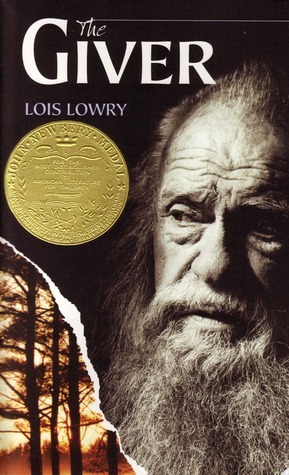
**SECTION ONE — Bookstore recommendation** At twelve years old, Jonas lives in a Community where there is no hunger, no war, no unemployment — and no color, no music, no love. Lois Lowry's *The Giver* (1993) follows Jonas from the moment he is assigned his life's vocation: Receiver of Memory, the single person permitted to carry the full weight of human history so that everyone else can be spared it. His teacher, the old man known only as the Giver, transmits to him the experience of snow on a hillside, of sunburn, of a family gathered around a Christmas tree, and finally of war and death. The more Jonas receives, the more he recognizes that his Community has not eliminated suffering — it has eliminated the capacity to feel anything at all. Written for readers roughly Jonas's own age but widely taught through adulthood, the novel poses a question with philosophical seriousness: what does a society lose when it decides that the price of safety is memory? It is a short book with no wasted sentences, and its final scene — Jonas on a sled in the snow, hearing music from below — is one of the most carefully constructed ambiguous endings in modern fiction for young readers. **SECTION TWO — Catholic anthropological reading** - **Created**: Lowry builds her entire plot on the premise that the human person is made for particularity — this face, this memory, this color red. The Community's sameness is not peace but erasure. The CCMMP's insistence on the unity of body and soul finds an unexpected literary argument here: Jonas can only begin to love when he can feel cold, see color, and hear music, because the body is not incidental to the person but constitutive of the person's capacity for relationship. - **Fallen**: The Community represents a specific form of social sin — not the disorder of passion, but the disorder of rationalized control. The Elders have not conquered concupiscence; they have institutionalized it, building a structure that systematically eliminates the friction through which virtue forms. The CCMMP distinguishes between suffering that wounds and suffering that, ordered rightly, participates in redemption. The Community abolishes both without distinguishing them. - **Redeemed**: Jonas's arc is one of growing moral perception followed by costly action. He does not simply acquire information about injustice — he acquires the capacity to be moved by it, which is the affective precondition for justice as Aquinas understands it in the *Summa Theologiae* II-II. His final choice to carry the infant Gabriel out of the Community rather than return him to 'release' is an act of justice-as-vindication: defending the wronged at personal cost. - **Prudence (memory)**: The novel's central structural argument is that memory is not nostalgia but the condition of practical wisdom. A community without access to its own history cannot deliberate well about the present because it cannot recognize patterns of error. This is the integral virtue of prudence-as-memory made narrative: Jonas begins to make genuinely prudent decisions only when he holds enough of the past to perceive what the present actually is. - **Justice (truthfulness)**: The Giver's willingness to transmit true memories — including the painful ones — against the Community's explicit ideology of controlled ignorance is an act of truthfulness in the virtue-theoretic sense: the alignment of what one communicates with what is real, at personal risk. **SECTION THREE — Conversation with the canon** Jordan Peterson[^1], in *Maps of Meaning*, describes a dream-image of total obliteration — 'skeletal black ruins sticking up here and there: no houses, no trees, no signs of other human beings' — as the psychic territory that opens when a culture loses the narrative structures that give suffering meaning. Lowry's Community is that obliteration made administrative: the ruins are invisible because the flattening was voluntary, negotiated, and gradual. Where Peterson reads the collapse of meaning-bearing tradition as a catastrophe registered in the mythic imagination, Lowry dramatizes the same collapse as a bureaucratic achievement that residents experience as comfort until someone is given the eyes to see what was traded away. ## References 1. Peterson, Jordan (1999). *Maps of Meaning: The Architecture of Belief*. — 'skeletal black ruins sticking up here and there: no houses, no trees, no signs of other human beings or of any life whatsoever.'
✓ Strengths
- ✓The novel treats memory as constitutive of personhood, not merely decorative — Jonas's gradual receipt of suppressed collective memories dramatizes the Thomistic claim that the human intellect requires contact with particular, embodied experience to form genuine practical wisdom.
- ✓The Community's elimination of choice exposes the intrinsic connection between suffering and dignity: Lowry shows that a life insulated from pain is also a life incapable of love, which maps directly onto the CCMMP premise that the person is ordered toward transcendence through both joy and affliction.
- ✓Jonas's growing capacity for moral perception — he begins to see color where others see grey — functions as a narrative image of the cogitative sense awakening: the person's ability to recognize the singular value of this particular human being in front of him.
- ✓The Giver himself models mentorship as a transmission of wisdom across generations, a form of prudence-as-good-counsel that the CCMMP treats as a social and not merely individual virtue.
- ✓The ending, deliberately ambiguous, places the weight of hope on an act of sacrificial love rather than on a guaranteed outcome — a structure that resonates with the Redeemed state's insistence that transformation is real without being coercive.
⚠ Considerations
- ⚠The novel's implicit anthropology is humanist rather than theistic: the restoration of memory and feeling is the horizon of redemption, and no transcendent source for human dignity is named. Readers shaped by the CCMMP will need to supply that grounding themselves.
- ⚠Euthanasia — called 'release' in the novel — is portrayed as a bureaucratic norm that Jonas eventually recognizes as murder. The narrative arc handles this well, but the early chapters describe infanticide in clinical, matter-of-fact terms that may disturb sensitive readers, particularly parents.
- ⚠The book's political anthropology implies that the abolition of difference (family, color, weather, music) is the source of injustice, but it does not fully reckon with why ordered community and legitimate authority are goods — leaving a reader with a residual individualism the CCMMP would want to correct.