Publisher
Word on Fire
Published
June 2, 2026
ISBN
cp-engaging-the-doctrine-of-the-church
Virtue scores
Review
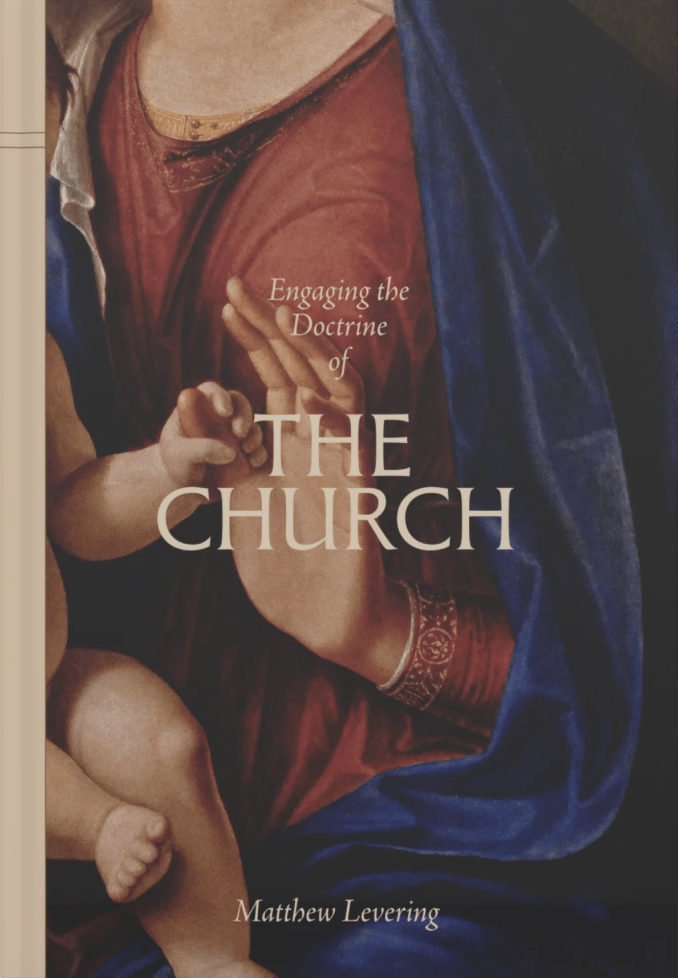
Summary: Engaging the Doctrine of the Church by Matthew Levering Engaging the Doctrine of the Church (Word on Fire Academic, 2025) is the seventh volume in Matthew Levering's systematic "Engaging the Doctrine" series. A 494-page hardcover, it approaches ecclesiology not through abstract propositions but through five rich biblical images of the Church — Bride, Family, Body, People, and Mother — before turning to the marks "apostolic" and "catholic." As Levering states in the book's introduction, "What I seek to offer is a set of reflections on the reality of the Church, filled with the Spirit of truth and united to Christ on the path of his cross, in light of the ongoing problems of sin, conflict, error, and division."¹ The book opens with the image of the Church as Bride of Christ, stressing the intimacy of the union between God and his people in Christ while insisting this relationship demands ongoing repentance and purification. The Family of God chapter draws heavily on African theology, examining the tension between the Church's vocation to social and political transformation and its primary eschatological end — the coming kingdom rather than any improved earthly order. The Body of Christ section places the Cross at the center of ecclesiology. Levering argues that cruciform discipleship stands in permanent tension with what he calls "Constantinianism" — the distortion of the Church into an instrument of power rather than of radical, self-giving love. The Mother chapter explores receptivity as a key disposition of Christian life, while the People of God discussion warns against "inverse hierarchology," a dynamic in which ecclesial discussion collapses into contests for power rather than reflection on shared holiness. Throughout, Levering insists that the Church's true beauty is found in "the radiation of the glory of the Spirit's love in Christ Jesus."² The final two chapters address the marks "apostolic" and "catholic" with sustained ecumenical engagement and a commitment to drawing on Tradition as a living resource rather than a merely historical artifact. Reviewers have praised the work for its remarkable scope: Reinhard Hütter describes it as "applied dogmatics at work — discerning, engaging, orienting," arguing that Levering "transcends the accommodating Constantinianisms of the left and of the right and expos[es] their respective heterodoxies."³ Thomas Joseph White similarly calls it "a fearless work of ecclesiological discernment," noting that "no alternative positions are left unconsidered, and all are treated with charity and respectful intellectual vigor."⁴ The volume is notable for its genuinely global ecclesiology, offering what Aaron Pidel, SJ describes as "a truly global survey of trends ranging from Europe to Latin America to Africa" while never allowing breadth to "blunt incisiveness of analysis."⁵ Ephraim Radner sums up the book's achievement: Levering approaches the Church "with a focus that takes in a sweeping array of witnesses, ancient and modern," producing "a traditional yet sharply focused, in some ways chastened but also deepened, Catholic ecclesiology."⁶ Endnotes Matthew Levering, Engaging the Doctrine of the Church (Park Ridge, IL: Word on Fire Academic, 2025), Introduction. Quoted in the publisher's product description at bookstore.wordonfire.org. Levering, Engaging the Doctrine of the Church, publisher's description. Reinhard Hütter, endorsement of Engaging the Doctrine of the Church, Word on Fire Academic product page. Thomas Joseph White, OP, endorsement of Engaging the Doctrine of the Church, Word on Fire Academic product page. Aaron Pidel, SJ, endorsement of Engaging the Doctrine of the Church, Word on Fire Academic product page. Ephraim Radner, endorsement of Engaging the Doctrine of the Church, Word on Fire Academic product page.
✓ Strengths
- ✓Situates ecclesiology within a sacramental and Trinitarian anthropology, treating the Church not as an institution to be managed but as the mode by which persons are incorporated into the divine life — a direct affirmation of the imago Dei premise in the CCMMP.
- ✓Word on Fire's editorial tradition consistently holds the unity of body and soul; a doctrinal treatment of the Church from this press is likely to address the Church's visible, incarnate structures — sacraments, liturgy, hierarchy — as genuinely constitutive of personal transformation, not merely symbolic.
- ✓By engaging doctrine at the scholarly level, the book equips readers with the kind of understanding prudence (prudence-understanding in the CCMMP taxonomy) that allows them to distinguish authentic ecclesial teaching from cultural noise — a formative function with direct pastoral application.
- ✓The treatment of the Church as Mystical Body of Christ addresses the Fallen condition directly: the Church is the community within which concupiscence is named, disciplined, and healed through sacramental grace and fraternal correction, not merely tolerated.
- ✓A doctrinal work on the Church from a formation-oriented publisher implicitly trains the virtue of docility (prudence-teachability) — the willingness to receive teaching from a source that transcends private judgment — which Aquinas identifies as integral to prudence itself.