Virtue scores
Review
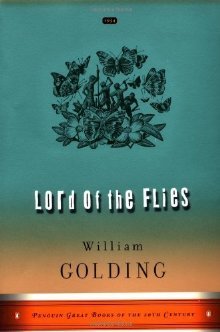
SECTION ONE A plane crashes on a deserted island during a nuclear war, and the boys who survive it — no adults, no rules, no rescue in sight — set about building a society. For about forty pages, it more or less works. William Golding wrote Lord of the Flies in 1954 partly as an argument with R.M. Ballantyne's Victorian adventure novel The Coral Island, in which English boys stranded on a Pacific island behave with praiseworthy pluck and Christian decency. Golding, a schoolteacher who had served in the Royal Navy during the Second World War, thought that portrait sentimental to the point of dishonesty. His novel answers it directly: given the same circumstances, the boys do not build a civilization — they dismantle one, and then each other. The thesis is not that children are uniquely vicious but that the habits, institutions, and shared fictions that keep adults from the same behavior are thinner than anyone wants to admit. Readers of moral philosophy, students of political theory, and anyone who works with young people will find this novel essential and unsettling in equal measure. SECTION TWO - **Created**: Simon is the novel's clearest marker of the imago Dei. He alone goes to the mountain voluntarily, sits in contemplation among the vines, and grasps that the 'beast' the boys fear is not an external creature. Golding gives him no religious vocabulary, but his capacity for solitude, conscience, and self-offering under pressure shows that the original orientation toward truth has not been entirely extinguished — even in a group that has abandoned every other norm of ordered life. - **Fallen**: The descent from parliamentary debate to pig-hunt to murder follows the Thomistic logic of concupiscence precisely: appetite does not simply appear; it grows through repeated acts that bypass reason. Jack's choir, first disciplined and uniformed, becomes the hunters, then the tribe, then the mob that kills Simon and Piggy. Each step is a habit formed, and the formation is in the wrong direction. The novel makes visible what Aquinas argues abstractly — that disorder compounds itself through acts. - **Fallen (social dimension)**: Roger's arc is the novel's most disturbing study in disordered will. Early on, he throws stones at the littluns but aims to miss, held back, Golding writes, by 'the taboo of the old life.' As the social structure collapses, that interior restraint dissolves with it. By the end he levers the boulder that kills Piggy with no visible hesitation. The CCMMP's account of the wounded will — that fallen persons require both interior formation and external structure to remain ordered — is visible here in photographic negative. - **Redeemed (partial and ironic)**: Golding does not offer a Redeemed arc, and this is deliberate. The naval officer who arrives at the novel's end represents adult civilization, and he turns away from the weeping children because he cannot bear what they reveal. Ralph weeps 'for the end of innocence, the darkness of man's heart.' The novel stops there. For Catholic readers, this is the correct diagnosis without the cure — which means the book is most useful in a context where the cure is already being discussed. - **Prudence (foresight)**: Ralph's insistence on the signal fire is a sustained exercise in prudential foresight: he alone keeps the end — rescue — in view and subordinates immediate satisfactions to it. The tragedy is that prudence, in Golding's account, cannot sustain itself against the pull of appetite in a community that has ceased to share its goal. His failure is instructive precisely because his reasoning is sound throughout. SECTION THREE Peterson[^1], in Maps of Meaning, argues that 'it is not the earthquake, the flood or the cancer that makes life intolerable... It is rather the pointless suffering that we inflict upon each other — our evil — that makes life appear corrupt beyond acceptability.' Lord of the Flies is a 220-page dramatization of that claim: Golding removes every external threat and shows that the boys manufacture their own terror from within. Lewis[^2], in Mere Christianity, insists that the moment of choosing which side one is on cannot be deferred indefinitely — 'It will not last for ever. We must take it or leave it' — and Golding's Simon embodies that urgency in reverse. Read together, Peterson supplies the anthropological diagnosis and Lewis the theological stakes that Golding's novel dramatizes but does not resolve. ## References 1. Peterson, Jordan B. (1999). *Maps of Meaning: The Architecture of Belief*. — 'it is not the earthquake, the flood or the cancer that makes life intolerable... It is rather the pointless suffering that we inflict upon each other' 2. Lewis, C.S. (1952). *Mere Christianity*. Page 37. — 'It will not last for ever. We must take it or leave it.'
✓ Strengths
- ✓Golding makes the disorder of the fallen will concrete and observable: the boys do not become savage because their environment changes but because the habits regulating appetite and aggression dissolve without social structure, mirroring the Thomistic account of concupiscence as disordered desire that overruns reason when the will is not trained toward the good.
- ✓The character of Simon functions as a counterpoint to the mob, showing that the imago Dei — the capacity for contemplation, conscience, and compassion — persists even when the community around him has abandoned ordered reason, a direct illustration of the CCMMP's 'Created' premise about ineradicable human dignity.
- ✓Ralph's arc demonstrates the virtue of prudence under pressure: his attempts to maintain the signal fire, govern by counsel, and anticipate consequences (rescue) are exactly the prudential goods of foresight and sound judgment that the novel shows eroding in the group, making the loss of those goods plot-visible.
- ✓The novel situates evil not primarily in external circumstances but in the interior life of the boys themselves, consistent with the CCMMP premise that suffering made intolerable is the suffering persons inflict on one another — a claim Peterson develops at length in Maps of Meaning.
- ✓Golding's naval-officer ending refuses a triumphalist resolution: rescue arrives, but the officer's embarrassed silence before the weeping children signals that adult civilization is itself only a thin layer above the same disorder, a move that keeps the moral weight on personal formation rather than social engineering.
⚠ Considerations
- ⚠⚠️ Content warning: the novel contains graphic violence including the killing of two children, a scene of frenzied mob murder, and sustained depictions of ritualized brutality; some editions also include crude language. Formators assigning this to younger adolescents should preview it carefully.
- ⚠The Redeemed arc is structurally absent: the novel offers no healing, no grace, and no restoration — the rescue is ironic rather than redemptive. Readers should be guided to read it as a diagnosis of the Fallen state rather than a complete Christian anthropology.
- ⚠Simon's quasi-mystical role risks being read as a Gnostic or purely intuitive spirituality rather than a sacramental one; without accompanying discussion, his death can suggest that goodness in a fallen world is merely tragic rather than pointing toward resurrection.